

Due diligence financials are the seller-side package of books, schedules, and support that a buyer or investor can verify without calling you every day. The work rests on three pillars: verified source data, documented automation and controls, and reconciliations with packaged evidence. Standards from Regulation G, IRS Publication 583, and COSO set the bar for what counts as defensible.
TL;DR:
- Reconciliation schedules must prominently show GAAP figures first, with detailed adjustments and tax effects separated to meet SEC requirements.
- Automation should produce an auditable trail, capturing user actions, timestamps, source links, and version histories to satisfy IRS and review standards.
- Bank and subledger reconciliations need weekly flagging of uncleared items, documented reasonings for adjustments, and supporting data stored alongside journal entries.
- A comprehensive deliverables index should be created before document gathering, highlighting missing items and enabling quick remediation if needed.
- Using integrated platforms like Peregrine can automate reconciliation and trail creation, reducing manual effort and improving audit credibility during due diligence.
Table of Contents
- Get your books ready for external review
- Design automation that produces auditable evidence
- Build reconciliations and disclosures buyers expect
- Test controls and package your evidence
- Why documented automation changes the diligence conversation
- Put the playbook to work with Peregrine
- FAQ
- Sources
Get your books ready for external review
A diligence-ready file does not happen in the final week before a buyer asks for it. It happens through a sequence of tasks that someone owns and a deadline someone tracks.
- Pull source documents at the transaction level, including who approved it, what it was for, and when it hit the books.
- Reconcile every subledger to the general ledger and to the bank, clearing stale items and writing down why each adjustment happened.
- Standardize the chart of accounts and build the schedules buyers always ask for: revenue roll-forwards, EBITDA adjustments, capital expenditures, and tax positions.
- List every non-GAAP measure you report and prepare a quantitative reconciliation to the nearest GAAP figure, matching the structure Regulation G requires.
- Assign an owner and a deadline to each workstream, then build a deliverables index so nothing sits unaccounted for in the data room.
Once the sequence is running, a few habits keep it from sliding backward:
- Flag uncleared bank items weekly instead of at month-end, so nothing ages past 30 days unexplained.
- Keep a running list of one-time adjustments with a one-line rationale for each.
- Store supporting documents next to the journal entry they support, not in a separate folder structure.
Pro Tip: Build the deliverables index before you start pulling documents, not after. It tells you exactly what's missing while there's still time to fix it.
Design automation that produces auditable evidence
Automation speeds up diligence prep only when it leaves a trail a stranger can follow. Bank feed matching, recurring journal entries, and routine exception routing are good candidates for automation because they're repetitive and rule-based. Judgment calls, like revenue recognition on a nonstandard contract or an unusual expense classification, stay manual and get a documented signoff from a named reviewer.
The trail matters as much as the task. A machine-sensible audit trail needs to capture the user who acted, the timestamp, a link to the source document, and a version history showing what changed and when. This lines up with the IRS guidance on machine-sensible records, which expects systems to preserve transaction-level detail along with the documentation that proves how records were created and stored.
Controls deserve the same intentionality:
- Build automated validations that flag out-of-range entries before they post, not after.
- Route exceptions to a specific person with a service-level deadline, not a shared inbox.
- Add supervisory review controls on anything touching revenue, reserves, or related-party transactions.
- Set retention and backup policies that match the recordkeeping expectations in IRS revenue procedure guidance.
For platforms like Peregrine or any integrated accounting stack, set a reconciliation cadence (weekly for cash, monthly for accruals), an exception SLA (48 hours for anything over a set dollar threshold), and a consistent logging standard so every entry traces back to its source.
Pro Tip: Give every automated reconciliation a unique reconcile ID that links the GL line to its source file and, if one was opened, its exception ticket. It turns an auditor walkthrough into a five-minute lookup instead of a half-day search.

Build reconciliations and disclosures buyers expect
Buyers and their advisors read non-GAAP figures the way the SEC trained public companies to present them, even in a private deal. Regulation G requires that any non-GAAP measure appear with the most comparable GAAP measure shown with equal or greater prominence, backed by a quantitative reconciliation. Forward-looking measures follow the same logic: where a GAAP comparable isn't available without unreasonable effort, document what's missing and provide the best reconciling information you have.
A clean reconciliation schedule usually includes:
- The GAAP line item first, not buried after the adjusted figure.
- Each adjustment broken out separately with a short rationale, never bundled into one lump "other" line.
- Tax effects shown as their own reconciling line rather than netted into the adjustments themselves, consistent with SEC staff interpretations on non-GAAP measures.
- A final adjusted figure that ties back to the number used anywhere else in the deal materials.
Reconciliation discipline matters because it is a named compliance requirement, not a style preference. SEC Corporation Finance Interpretations specifically call out tax-effect treatment and restrictions on presenting certain liquidity measures on a per-share basis, which is exactly where sellers trip up during buyer review.
Document management's reasoning for each adjustment while it's fresh. A rationale written during diligence, under time pressure, reads differently than one written at the time the entry was made.
Test controls and package your evidence
Verification turns a stack of schedules into something a reviewer can trust without chasing you for backup. Work top-down.
- Identify the accounts and controls where a misstatement would actually matter, following the risk-based approach COSO monitoring guidance recommends.
- Pull the evidence types reviewers expect: reconciliations, source invoices, bank confirmations, exception logs, system audit trails, and signed reviewer notes.
- Sample transactions within each high-risk account and document any exceptions found, along with how you remediated them.
- Package everything with an index, a short reader's guide, reconciliation summaries, signoff logs, and a change history.
Continuous monitoring beats a scramble at deal time. An exception dashboard that's been running for months gives you ready-made evidence of ongoing control performance instead of a one-time test built for the data room.
- Keep sample sizes proportional to account risk, not uniform across the board.
- Note remediation dates next to each exception so reviewers see the issue was closed, not just found.
Why documented automation changes the diligence conversation
Automation without documentation just moves the risk from your spreadsheet to your software. The firms that get through diligence with fewer follow-up questions are the ones that paired every automated workflow with a human signoff point and a visible audit trail from day one. That discipline shows up as shorter diligence cycles and buyers who stop asking "how do we know this number is right" after the first review round. Speed without that evidence trail just produces a faster version of the same credibility problem.
— Owen
Put the playbook to work with Peregrine
Building this checklist by hand takes months most finance teams don't have. Some platforms connect directly to QuickBooks and can run reconciliations, exception routing, and audit-trace logging, so the evidence trail builds itself as transactions happen instead of getting reconstructed under deadline pressure.
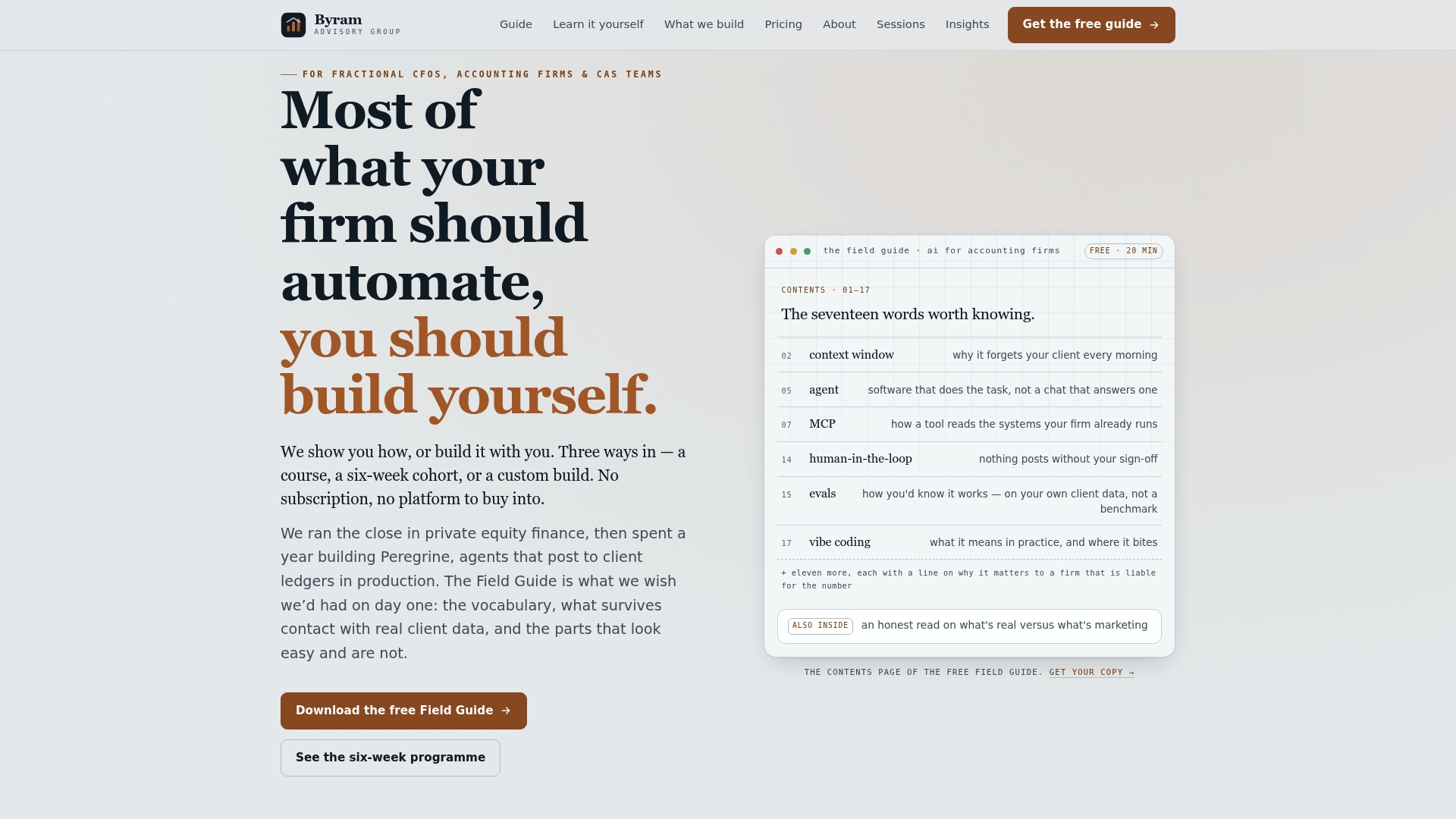
Different starting points call for different engagements. If your books need a fast cleanup before a deal timeline, The Sprint is a fixed $2,000 engagement built for that. If your team needs to adopt these workflows and controls at scale, The Bootcamp trains your staff directly. For a fully custom automation build, reach out about The Build to scope it.
- Download The Field Guide to AI for Accounting Firms for free implementation templates.
- Book a close teardown to see exactly where your current process breaks down.
- Request a demo of Peregrine to see the audit trail in action on your own books.
This article is general information, not a substitute for advice from a qualified financial advisor. Consult a qualified financial professional about your own circumstances before acting on anything here.
FAQ
What makes financials "buyer-ready" for due diligence?
Buyer-ready financials are reconciled to the bank and subledgers, supported by transaction-level source documents, and accompanied by reconciliation schedules for any non-GAAP measures. They should let a reviewer verify a number by following the paper trail, not by asking the preparer to explain it.
How do you reconcile non-GAAP measures to GAAP correctly?
Present the GAAP figure first, break out each adjustment with a stated rationale, and show tax effects as a separate line rather than folding them into the adjustments, following Regulation G and related SEC staff guidance. The reconciliation should give equal or greater visual prominence to the GAAP measure.
What records do you need to keep for audit defensibility?
Electronic records need to be organized, indexed, and retrievable in a way that supports the financial statements and tax filings, per IRS Publication 583. That includes the source documents themselves and the system documentation showing how those records were created and stored.
What are common red flags buyers find during financial due diligence?
Unreconciled bank items, undocumented management adjustments, non-GAAP measures without a GAAP reconciliation, and automated entries with no visible approval trail are among the most common issues reviewers flag. Each one triggers follow-up questions that slow down a deal.
Can automation tools like Peregrine help prepare due diligence financials?
Yes, when the automation is designed with documented controls and human signoff points built in, not just faster data entry. Some platforms connect to QuickBooks and generate the reconciliations and audit-trace logs that external reviewers expect to see.
Sources
- Final Rule: Conditions for Use of Non-GAAP Financial Measures (SEC summary at Harvard Law site)
- SEC: Corporation Finance Interpretations — Non-GAAP financial measures
- Publication 583 (Starting a Business and Keeping Records)
- COSO monitoring guidance